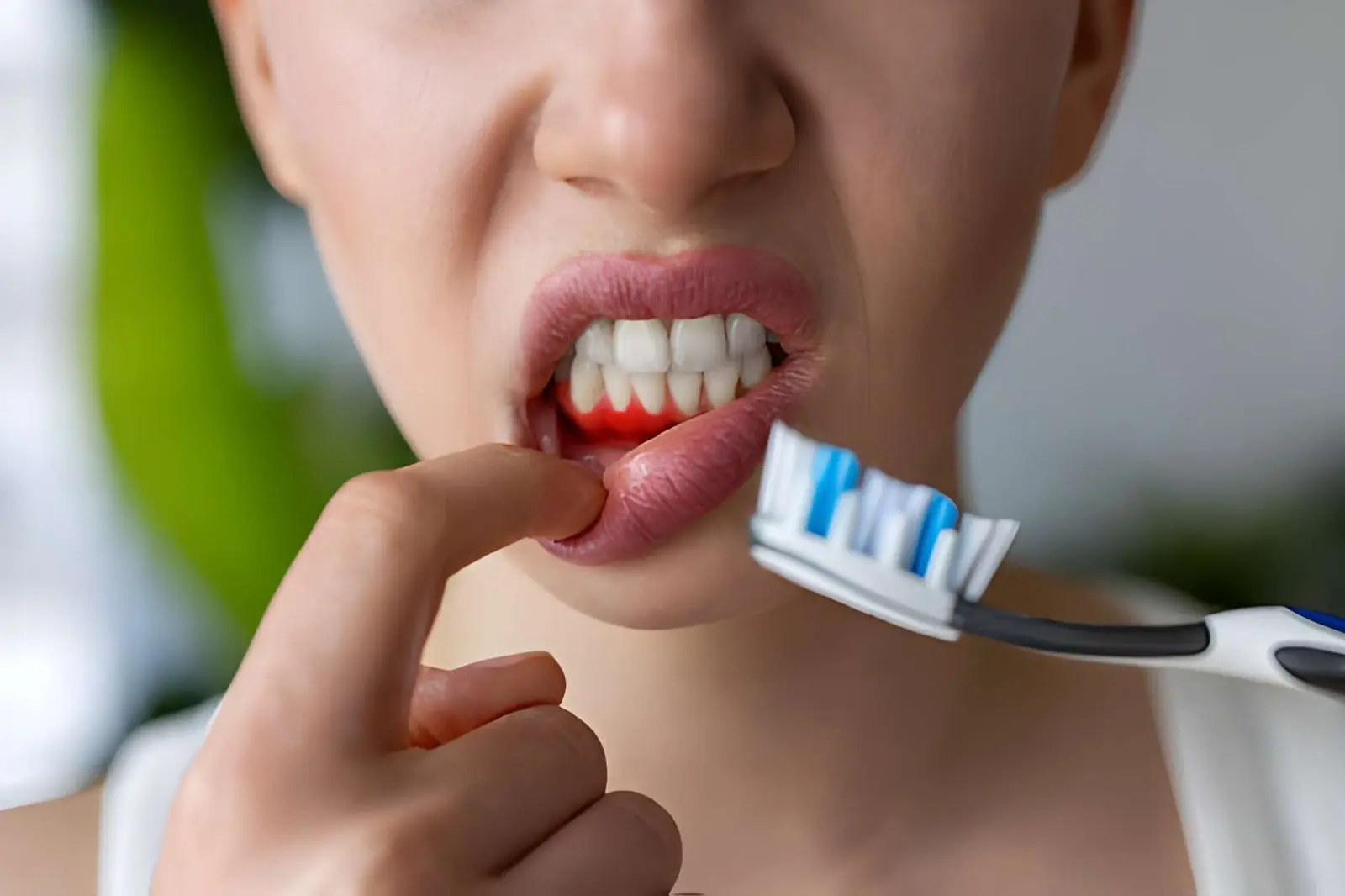
Why do gums bleed after brushing?
Bleeding gums after brushing are often an early sign of gum disease caused by plaque buildup and inflammation along the gum line. Early periodontal treatment and professional dental care can stop gingivitis before it progresses into advanced gum disease that damages the gums, bone, and teeth.
Let’s be honest. When your gums bleed a little after brushing, your first instinct isn’t panic. It’s more like: huh, weird, followed immediately by rinsing and going to bed. We’ve all been there, and we’d all do it again tomorrow. But here’s the thing nobody tells you until they really should: that little swirl of pink in the sink is actually your mouth’s way of asking for help, and the earlier you listen, the better, because early periodontal treatment is quick, straightforward, and genuinely no big deal. Bleeding gums are one of the first signs of gum disease, and first signs are the best time to do something about it.
What Is Gum Disease, Exactly?
Bleeding gums are most commonly a symptom of gum disease, which dentists call periodontal disease. It is an infection of the tissues that surround and support your teeth: the gums, the connective tissue, and eventually the bone beneath.
It starts quietly, almost always with a stage called gingivitis. At this point, plaque (that sticky, bacteria-laden film that forms on your teeth throughout the day) has built up along and below your gum line. If it isn’t removed through consistent brushing and flossing, it hardens into tartar, which a toothbrush simply cannot remove on its own. The bacteria in that plaque irritate the gum tissue, causing inflammation, puffiness, and yes, bleeding.
The good news is that gingivitis is completely reversible. With proper professional cleaning and improved home care, your gums can bounce back to full health at this stage. No permanent damage done.
The bad news? Most people don’t catch it here. If gingivitis goes untreated, it progresses to periodontitis, where the infection moves deeper. The gums start pulling away from the teeth, creating pockets where bacteria accumulate and thrive. Your immune system fights back, but in doing so, it can actually break down the bone and connective tissue holding your teeth in place. At this stage, the damage is no longer reversible. It can only be managed.
Left unchecked further, periodontitis is the leading cause of adult tooth loss in America. Not cavities, not accidents. Gum disease. And it does all of this, largely, without ever hurting.
Why Does Gum Disease Happen? (It’s Not Just About Brushing)
The obvious answer is poor oral hygiene. And yes, not brushing or flossing well enough is a major contributor. Plaque needs to be cleared away consistently or it will set up shop and cause problems. But gum disease is more complicated than a simple you need to brush better story, and plenty of diligent brushers end up with it anyway. Here are the real risk factors:
- Smoking. This is the single biggest lifestyle risk factor. Smoking restricts blood flow to the gums, which actually masks the early warning signs, meaning smokers can have significant gum and bone loss without ever noticing the bleeding that would alert a non-smoker. It also impairs healing, making periodontal treatment less effective even after the infection is addressed.
- Diabetes. The relationship here goes both ways: high blood sugar feeds the bacteria that cause gum disease, and active gum infection makes blood sugar harder to control. The two conditions genuinely make each other worse, which is why people with unmanaged diabetes are at significantly higher risk.
- Genetics. Gum disease can run in families, not because there’s a specific gum disease gene, but because learned habits around brushing, flossing, and dental visits, combined with shared nutritional environments, can put certain families at higher risk.
- Hormonal changes. Pregnancy, puberty, and menopause can all make gums more sensitive and reactive to bacteria. Pregnancy gingivitis is common enough that it has its own name.
- Stress. Chronic stress weakens the immune system, making it harder for your body to fight off the bacterial infection taking hold in your gums.
- Certain medications. Antihistamines, antidepressants, and blood pressure drugs can cause dry mouth, which reduces saliva flow and allows bacteria to proliferate unchecked.
- A high-sugar diet. Sugar is essentially fuel for the bacteria that cause gum disease. If your diet is heavy on processed foods and sweets, you’re feeding the problem.
The point is this: periodontal disease is not a character flaw or a simple matter of laziness. It’s a real infection with real contributing factors, and understanding those factors is the first step toward doing something about them.
The Signs: Early, Advanced, and What Your Dentist Sees
This is where things get genuinely useful, because the symptoms fall into clear categories, and knowing where you are on the spectrum matters.
The Early Signs (Easy to Miss, Hard to Ignore Once You Know)
These are subtle enough that most people either miss them entirely or rationalize them away:
- Gums that look slightly redder or more swollen than usual
- Mild tenderness or soreness when brushing or flossing
- A faint bad taste in your mouth that doesn’t go away after brushing
- Bleeding during brushing or flossing. Usually just a little, just for a moment, and then it stops
These signs are easy to dismiss, which is exactly why gingivitis so often slides quietly into something more serious. The absence of pain is not the absence of a problem.
The More Visible, Advanced Signs
At this stage, things are harder to ignore, though people still manage it:
- Gums that visibly pull away from your teeth, making them appear longer (there’s an old expression for this: long in the tooth)
- Persistent bad breath that survives every toothbrush and mint you throw at it, because bacteria producing foul-smelling sulfur compounds are living deep in gum pockets that surface hygiene simply can’t reach
- Teeth that feel slightly loose, or a bite that seems to have shifted
- Pus or discharge along the gum line
- Increased sensitivity to hot and cold, as receding gums expose the root surfaces of teeth
What Your Dentist Sees That You Can’t
This is where professional evaluation becomes non-negotiable. During a periodontal exam, your dentist or hygienist uses a small instrument called a periodontal probe to measure the depth of the pockets between your gums and your teeth. Here’s what they’re specifically looking for:
- Pocket depth. Healthy gums have pockets of 1 to 3 millimeters. Anything deeper suggests disease is present, and the deeper the number, the more advanced the condition.
- Gum recession. How much the gums have pulled away from the teeth, exposing the root surface beneath.
- Tooth mobility. Any looseness in the teeth is a sign of bone loss beneath the gumline.
- Bleeding on probing. Even if you’re not seeing visible bleeding at home, bleeding when the probe touches the tissue is a clinical indicator of active inflammation.
- X-ray findings. Dental X-rays reveal bone loss beneath the gumline, damage that is completely invisible to the naked eye.
None of that information is available to you standing in front of your bathroom mirror, and that’s precisely why a professional exam isn’t optional. Your dentist can catch and measure damage that has no symptoms yet, which means they can stop the disease in its tracks before it ever becomes something you actually feel. That window of opportunity is real, and a single appointment is all it takes to find out exactly where you stand.
What to Do If You Notice These Signs
First: make an appointment. We know, we know. It seems obvious. But the number of people who notice bleeding gums, tell themselves they’ll call the dentist soon, and then don’t for another six months is staggering. Don’t be that person. Early-stage gum disease responds beautifully to periodontal treatment; advanced-stage gum disease requires far more intensive intervention. The math here is simple, even if the decision doesn’t always feel that way.
Your dentist will assess the severity of your condition. If you have gingivitis, a professional cleaning (scaling and root planing) along with improved home care may be all you need. If periodontitis is present, treatment becomes more targeted but is absolutely still effective.
Second: take your daily habits seriously. Even the best professional periodontal treatment can’t compensate for a home routine that isn’t working. Here’s what actually makes a difference:
- Brush twice a day with a soft-bristled toothbrush, holding it at a 45-degree angle to your gum line so the bristles reach below as well as along the surface. Aggressive, hard scrubbing does not equal cleaner teeth. It equals damaged gums and enamel.
- Floss daily. If your gums bleed when you floss, keep going gently rather than avoiding it altogether. The bleeding usually decreases as inflammation resolves.
- Consider a water flosser. It’s an excellent addition for cleaning between teeth and along the gum line where traditional floss can’t always reach.
- Use an antibacterial mouthwash (no alcohol) to reduce the bacterial load in your mouth between brushing sessions.
- Cut back on sugar. You have to starve the bacteria that are targeting your gums.
- Drink more water throughout the day to keep saliva flowing and wash away food debris.
- If you smoke, think about quitting. It is the single highest-impact thing you can do for your gum health, full stop.
These habits aren’t glamorous, but they are genuinely powerful.
Do I Need to See a Specialist for Periodontal Treatment?
Here’s a question that comes up a lot, and the answer is more nuanced than a simple yes or no.
Your general dentist is absolutely equipped to diagnose and treat gum disease, especially in its earlier stages. A routine dental exam will catch the warning signs, and your dentist can perform scaling and root planing, guide your home care routine, and monitor your progress over time. For many patients, this level of care is all that’s needed.
However, for more advanced or complicated cases, your general dentist will likely refer you to a periodontist, a specialist who has completed three additional years of training beyond dental school, focused specifically on gum disease, the bone and tissue supporting your teeth, and dental implants. The situations that typically call for a periodontist include:
- Deep gum pockets that don’t respond to standard cleaning
- Significant bone loss around the teeth
- Recurring infection despite regular treatment
- Cases complicated by systemic conditions like diabetes
- Advanced procedures like gum grafting, bone regeneration, or periodontal surgery
Can you go directly to a periodontist without a referral? Yes, you can. Periodontists see patients both by referral and by self-referral, so if you’re concerned about your gum health and want to see a specialist directly, nothing is stopping you. The practical consideration is that your general dentist may have valuable context about your overall oral health history, and many patients benefit from coordinating care between both providers. But if you’ve been putting off seeking help because you weren’t sure who to call, know that going directly to a periodontist is a completely valid option.
Your Gums Are Part of the Story Too
Here’s something worth sitting with: we spend a lot of time and energy thinking about our teeth. Whitening them, straightening them, protecting them from cavities. But our teeth don’t exist in isolation but anchored in gum tissue and bone, and without healthy gums, everything else is eventually compromised.
Think of your gums as the foundation of a building. You can have the most beautiful structure on the block, but if the foundation is crumbling, nothing above it is safe. Gum health is not a secondary concern or an afterthought but the ground everything else stands on.
But gum disease is both preventable and treatable. Caught early, gingivitis resolves completely. Even periodontitis, while not reversible, is absolutely manageable, and people with properly treated gum disease keep their natural teeth for life. The only thing standing between I’ll deal with it later and l’m so glad I came in when I did is the decision to make the appointment.
If your gums have been talking to you through bleeding, puffiness, tenderness, or bad breath that won’t quit, it’s time to have a periodontal treatment with Great Expressions Dental Centers. Our team is ready to help you figure out exactly where things stand and what to do about it. From a routine exam to a full periodontal evaluation, we’ll meet you where you are. Book your appointment today.
Also Read-Future Trends in Emergency Vehicle Technology