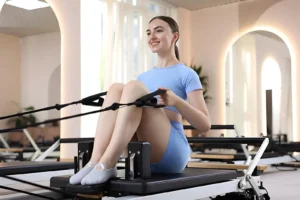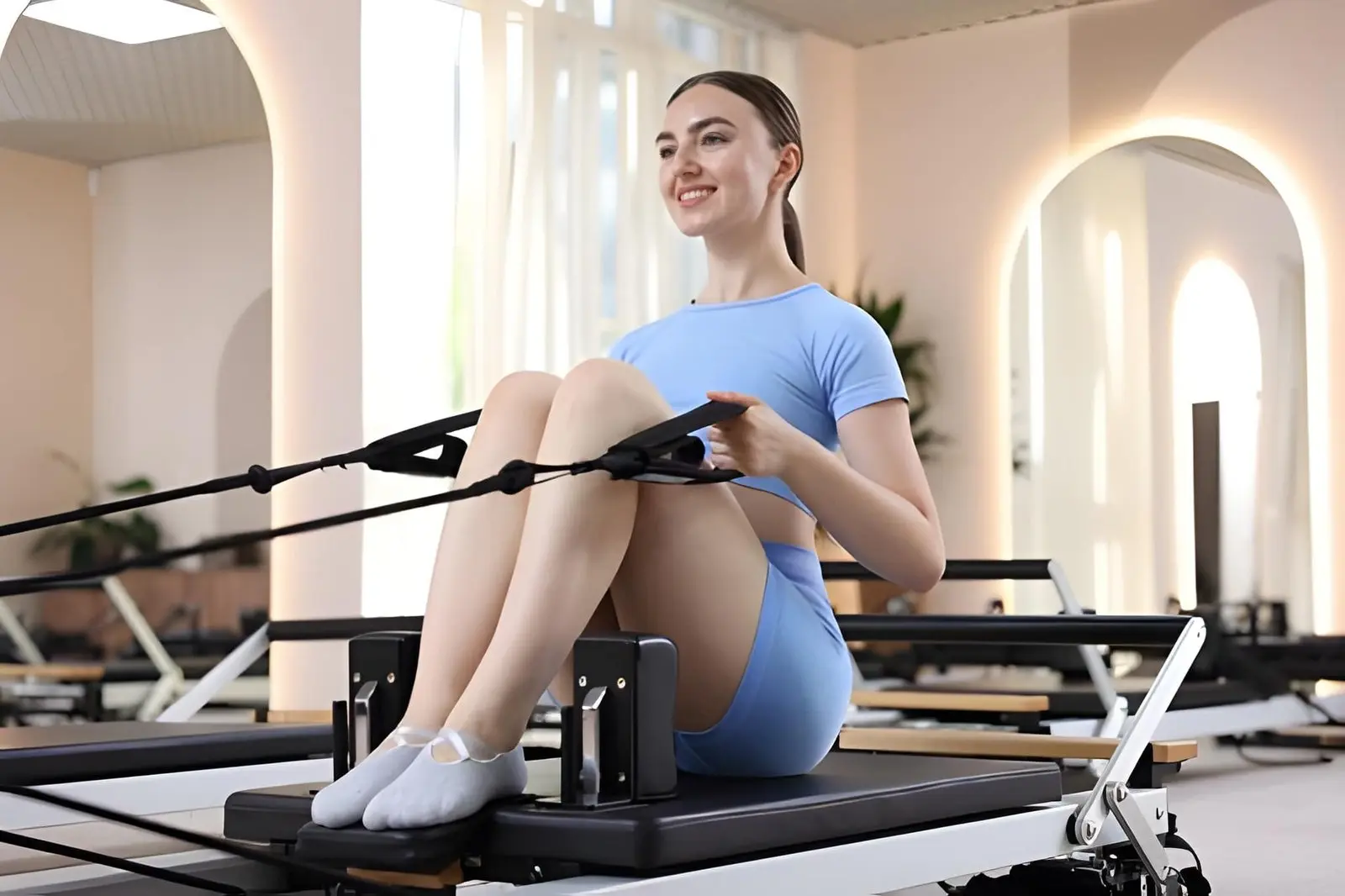
A reformer pilates machine offers a flexible way to combine resistance exercise, mobility, balance and controlled movement in one piece of equipment. Instead of relying on fixed gym stations, the machine uses a sliding carriage, spring tension, straps and adjustable support points to create a wide range of exercises. This allows users to train the legs, upper body, core and mobility within the same session while changing the challenge through spring settings and body position. For home users, a reformer pilates machine can provide considerable exercise variety without requiring several large pieces of equipment.
Why Reformer Training Can Feel More Dynamic
A reformer pilates machine creates a different experience from conventional strength equipment because the carriage moves in response to the user. The person exercising must produce enough force to move the platform while also controlling its speed and direction. This makes precision an important part of the workout, particularly during exercises where the carriage can move quickly if the user loses control. The machine therefore combines resistance with stability demands, encouraging users to think about balance, alignment and smooth movement rather than simply completing repetitions.
Spring Resistance Creates More Than One Type Of Challenge
The springs on a reformer pilates machine can make an exercise harder, easier or more stable depending on how the movement is performed. Heavier springs may increase the effort required during a pushing exercise, while they can also provide more support when the carriage needs to remain controlled. Lighter springs reduce resistance but may allow the carriage to move more freely, increasing the need for balance. This makes reformer training highly adjustable because difficulty depends on the relationship between resistance, body position and the direction of movement.
Lower Body Training Can Be Varied Easily
A reformer pilates machine can support many different exercises for the glutes, quadriceps, hamstrings, calves and hip muscles. Footbar presses, bridges, lunges and standing exercises can all be changed by adjusting spring tension or altering foot position. The straps can also be used for leg circles and other controlled hip movements. Because the carriage moves during much of this work, lower-body exercises often require the pelvis and trunk to remain stable, which can make the session feel more coordinated than simply isolating one muscle group.
Footbar Exercises Build Familiarity With The Machine
Footbar exercises are useful for learning how a reformer pilates machine responds because the user has a stable surface to press against while the carriage travels along the rails. Different foot placements can change the emphasis of the movement, while stronger or lighter spring settings alter the resistance. The user should control both the push and the return, rather than allowing the springs to pull the carriage quickly back to the starting position. This creates a combination of strength, control and movement awareness.
Upper Body Work Can Be Added Without Changing Equipment
A reformer pilates machine can also train the shoulders, arms, chest and back through the rope and strap system. Exercises can be performed while lying, sitting or kneeling, giving users several ways to change the difficulty. Pulling and pressing movements can be combined with trunk stability, particularly when the body is unsupported. This means an upper-body exercise may also challenge the abdominal muscles and posture, creating a more integrated style of training than a machine where the torso remains fixed against a seat.
Strap Exercises Can Challenge Coordination
The straps on a reformer pilates machine allow the arms or legs to work against spring tension while the carriage remains free to move. This can require good coordination because uneven pulling may cause the platform to move differently from one side to the other. Controlled strap work encourages the user to apply force evenly and maintain body position throughout the exercise. Seated rows, arm presses and kneeling pulls are examples of movements where coordination and resistance can be trained together.
Core Training Is Built Into Many Movements
A reformer pilates machine naturally encourages core involvement because the user often has to stabilise the torso while the carriage, arms or legs are moving. The abdominal muscles may work to prevent excessive rotation, arching or shifting during planks, kneeling work, leg exercises and standing sequences. Rather than treating core work as an isolated part of the session, reformer training often integrates trunk control into movements that also involve other muscle groups.
Mobility Can Be Trained With Active Control
A reformer pilates machine can support mobility by allowing users to move through a controlled range while remaining connected to resistance. The straps can guide the arms or legs, while the springs provide either support or tension depending on the exercise. This can help users work on hip and shoulder mobility while maintaining muscular engagement. The emphasis is generally on moving smoothly through a comfortable range rather than forcing flexibility or relying entirely on passive stretching.
What To Look For When Comparing Machines
A reformer pilates machine should be compared on more than appearance or price. Important considerations include frame stability, carriage travel, spring range, footbar adjustment, rope quality, machine dimensions and replacement-part availability. A suitable reformer pilates machine should feel stable during exercise, provide smooth carriage movement and offer enough adjustment to suit the intended user. Warranty terms and access to replacement springs, ropes and other components can also affect the long-term value of the machine.
The Frame Should Feel Secure
The frame forms the foundation of a reformer pilates machine and should remain stable during lying, kneeling and standing exercises. Timber, aluminium and steel can all provide strong construction when the design is well engineered. Buyers should focus on rigidity, secure joints and the way the machine handles movement rather than assuming one material is always better than another. A frame that shifts or flexes excessively can make exercises feel less controlled.
Carriage Travel Should Suit The User
The carriage on a reformer pilates machine should move smoothly and provide enough travel for the user’s height. Taller users may need a greater distance to achieve comfortable leg extension, while carriage width can affect comfort during side-lying or kneeling exercises. The padding should support the body without feeling excessively soft, and the wheels should allow consistent travel along the rails. Buyers should compare usable carriage dimensions rather than looking only at the overall length of the frame.
Spring Variety Makes Progression Easier
A reformer pilates machine should offer several spring combinations so resistance can be adjusted gradually between exercises. Different movements may require very different tension levels, particularly when moving from lower-body work to smaller upper-body exercises. Buyers should also check whether replacement springs are readily available because springs are mechanical components that may need to be replaced after repeated use.
Footbar Position Can Change The Exercise
A reformer pilates machine with an adjustable footbar can accommodate different body sizes and movement patterns more effectively. The footbar may be used for lower-body presses, bridges, planks and standing exercises, so its position can influence comfort and range of motion. Multiple settings are useful when the machine is shared by several people. The locking mechanism should remain secure under pressure and should be simple enough to adjust without creating unnecessary interruption between exercises.
Ropes And Handles Should Be Easy To Adjust
The ropes on a reformer pilates machine should remain even so both sides of the body receive consistent resistance. Adjustable rope length can help accommodate different users and exercises, while comfortable handles and foot loops make repeated sessions more practical. Buyers should check whether these components can be replaced separately, as ropes and straps may wear faster than the main frame or carriage.
Space Planning Should Happen Before Purchase
A reformer pilates machine requires more room than the frame dimensions alone because users need space for straps, standing movements and safe access around the equipment. The intended room should be measured carefully, and the delivery route should also be checked for narrow doors, hallways or stairs. Some machines can be folded or stored upright, but these features should only be used when the equipment has been specifically designed for that type of storage.
Permanent Setup Can Make Training Easier
A reformer pilates machine that remains assembled and ready to use may be more likely to become part of a regular exercise routine. Permanent placement works well in a spare room, studio or dedicated home gym where floor space is available. In smaller homes, a foldable or movable design may be more practical, but the storage process should be simple enough to manage regularly. A machine that takes too much effort to move may be used less often despite saving space when stored.
Accessories Can Expand The Exercise Library
Accessories can add new movements to a reformer pilates machine and increase the variety available over time. Sitting boxes can support seated, side-lying and prone exercises, while jumpboards can be used for controlled jumping movements. Platform extenders can provide additional standing space, and smaller props such as rings or balls can add resistance or positioning challenges. Buyers should compare which accessories are included because the total package may represent better value than purchasing everything separately later.
A Sitting Box Adds More Positions
A sitting box can change how the user interacts with the reformer pilates machine by raising the body above the carriage and creating a larger support surface. This can be useful for rowing, side work, abdominal exercises and back-extension movements. The box should fit the machine securely and remain stable when the user changes position or pulls against the straps.
A Jumpboard Adds A Different Type Of Lower Body Work
A jumpboard attaches to the front of a reformer pilates machine and gives the user a broad surface to push against while lying on the carriage. This allows repeated jumping-style movements without landing directly on the floor. The exercise can increase lower-body intensity and create a more continuous conditioning effect. Spring resistance should be selected carefully so the carriage remains controlled throughout both the pushing and returning phases.
Home And Commercial Machines Serve Different Needs
A home reformer pilates machine may focus on compact dimensions, easier storage and affordability, while commercial models are generally designed for repeated daily use. Studio equipment may include heavier frames, more durable upholstery and quicker adjustment systems because many people may use the same machine. A home user who trains frequently may still prefer a more robust model, while someone with limited space may prioritise portability and a smaller footprint.
Good Technique Matters More Than Complexity
A reformer pilates machine offers a large number of possible exercises, but beginners do not need to start with advanced movements. Learning how to adjust springs, position the footbar and control the carriage is more important than attempting difficult-looking exercises too soon. Professional instruction can help users understand how resistance and alignment affect each movement, while structured online classes can provide additional variety once the basic controls are familiar.
Regular Maintenance Protects Performance
A reformer pilates machine should be inspected regularly so moving parts continue to operate smoothly. Rails should be kept free from dust and debris, upholstery should be cleaned using suitable products and springs should be checked for changes in shape, corrosion or tension. Ropes, handles, loops and clips should also be inspected for wear, while bolts and adjustment mechanisms should remain secure. Following the manufacturer’s maintenance guidance can help extend the useful life of the equipment.
Consistent Use Creates The Most Value
A reformer pilates machine can support long-term training when it fits naturally into the user’s routine. Progress can involve improved movement quality, better balance, smoother carriage control, stronger resistance or greater mobility. Not every session needs to become harder, because precision and coordination are also meaningful improvements. Choosing a machine that is comfortable, accessible and suitable for the available space can make regular use more realistic over time.
Frequently Asked Questions
What can you train with a reformer pilates machine?
A reformer pilates machine can be used for lower-body strength, upper-body resistance, core control, mobility, balance and coordinated full-body exercise.
Is reformer training suitable for someone new to Pilates?
Yes, beginners can use the machine when the exercises, spring settings and movement ranges match their ability.
How much room does a reformer require?
The exact amount depends on the model, but users should allow additional space around the frame for straps, side exercises and safe access.
Can a reformer pilates machine be used for strength training?
Yes, adjustable spring resistance can challenge the major muscle groups through a broad range of exercises.
Does the machine always become harder with heavier springs?
No, heavier springs may create more resistance in some exercises but can provide additional support in others.
Can a reformer pilates machine help with mobility?
Yes, the straps and carriage can support controlled movement through the hips, shoulders and other joints while maintaining muscular engagement.
What should taller users look for?
Taller users should compare carriage travel, stopper positions, rope length and the overall adjustment range of the machine.
Are foldable machines suitable for home use?
Yes, they can be practical where space is limited, provided the frame remains stable during use and the storage mechanism is convenient.
Do I need accessories when I first buy a reformer?
No, many exercises can be completed using the standard machine, although accessories such as a sitting box or jumpboard can add variety later.
How often should the equipment be inspected?
Springs, ropes, rails, clips and adjustment mechanisms should be checked regularly and maintained according to the manufacturer’s recommendations.
Can multiple people use one reformer pilates machine?
Yes, provided the machine offers enough adjustment in the footbar, ropes, springs and carriage settings to suit different users.
What are the most important buying considerations?
Frame stability, carriage quality, spring range, machine dimensions, adjustability, warranty coverage and replacement-part availability are all important factors.
Also Read-Future Trends in Emergency Vehicle Technology