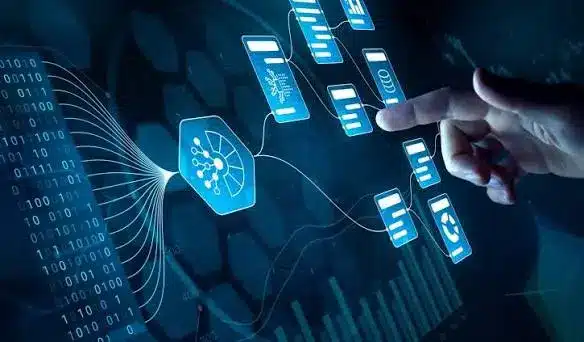
Modern businesses communicate with customers across email, websites, social media, search engines, messaging platforms, and many other digital channels. Managing every interaction manually can quickly become difficult, especially as a company attracts more leads and customers.
Marketing automation helps businesses handle many repetitive marketing activities through technology. Instead of manually sending every email, following up with every prospect, or organizing every customer interaction, companies can create automated workflows that respond to specific actions and customer behaviors.
However, marketing automation involves much more than scheduling emails. Modern platforms can help businesses collect leads, segment audiences, personalize communication, score prospects, track customer journeys, and measure campaign performance.
When businesses use automation strategically, they can save time while delivering more relevant experiences to customers.
What Is Marketing Automation?
Marketing automation refers to using software and technology to automate repetitive marketing processes.
Businesses can create rules that trigger specific actions when customers perform certain activities.
For example, when someone submits a contact form, an automated system can immediately send a welcome email. If that person later visits a product page several times, the system may send additional information related to that product.
Marketing teams commonly automate tasks such as:
- Email campaigns
- Lead nurturing
- Customer segmentation
- Follow-up messages
- Social media scheduling
- Lead scoring
- Customer onboarding
- Campaign tracking
- Sales notifications
- Personalized recommendations
Automation allows marketers to manage larger audiences without manually communicating with every contact.
However, successful automation still requires human planning. Businesses must decide what messages customers should receive, when they should receive them, and which actions should trigger each workflow.
Lead Generation Becomes Easier to Manage
Businesses often generate leads from many different sources.
A potential customer might submit a website form, download a guide, subscribe to a newsletter, interact with an advertisement, or request a product demonstration.
Without an organized system, these leads can easily become scattered across spreadsheets, email accounts, and different platforms.
Marketing automation tools help collect and organize lead information in one place.
For example, when someone completes a website form, the system can automatically add the contact to a customer database and assign relevant tags.
The platform may categorize that person according to:
- Lead source
- Location
- Product interest
- Company size
- Previous interactions
- Stage in the customer journey
Therefore, marketers can manage leads more effectively and create campaigns for specific audience groups.
Automated Lead Nurturing Keeps Prospects Engaged
Not every potential customer is ready to buy immediately business intelligence.
Some people may discover a company months before making a purchasing decision.
Marketing automation helps businesses stay connected with these prospects through lead-nurturing campaigns.
For example, a software company might create an automated email sequence for people who download a guide.
The first email could deliver the resource.
A few days later, another email could provide useful educational information.
After that, the company might send a case study, product comparison, or invitation to schedule a demonstration.
This approach keeps communication consistent without requiring employees to manually send every message.
More importantly, businesses can design different sequences for different types of leads.
As a result, prospects receive information that better matches their interests and position in the buying process.
Audience Segmentation Improves Marketing Relevance
Sending the same message to every customer rarely produces the best results.
Different customers have different interests, budgets, problems, and purchasing histories.
Marketing automation makes audience segmentation easier.
Businesses can divide contacts into groups based on information such as:
- Previous purchases
- Website behavior
- Email engagement
- Geographic location
- Industry
- Company size
- Product preferences
- Subscription status
Once marketers create these segments, they can send more relevant campaigns.
For example, an online retailer could send one promotion to customers who previously purchased electronics and another to customers interested in clothing.
Similarly, a business-to-business company could create separate campaigns for small businesses and large enterprises.
Better segmentation reduces irrelevant communication and gives customers a more personalized experience.
Personalization Goes Beyond Using a Customer’s Name
Marketing personalization once meant adding a person’s first name to an email.
Today, automation allows companies to create much more detailed experiences.
Businesses can personalize content based on customer behavior, interests, purchases, and previous interactions.
For instance, an online store may recommend products based on items a customer viewed previously.
A service company might send information about a specific service after someone visits that service page.
Similarly, a software provider can send different onboarding instructions depending on which subscription plan a customer selects.
Therefore, personalization becomes more useful when businesses connect it to actual customer behavior rather than simply inserting personal details into generic messages.
Email Marketing Remains a Major Automation Channel
Email continues to play an important role in marketing automation.
Automated emails allow businesses to communicate with customers at important moments without manually creating each message.
Common automated email campaigns include:
- Welcome emails
- Abandoned-cart reminders
- Appointment reminders
- Product recommendations
- Renewal notices
- Re-engagement campaigns
- Post-purchase follow-ups
- Educational email sequences
Timing makes these campaigns especially useful.
For example, an abandoned-cart email can reach a shopper soon after they leave a website without completing their purchase.
Likewise, a subscription business can automatically send a renewal reminder before a customer’s plan expires.
Because the system responds to customer actions, messages often arrive when they are most relevant.
Lead Scoring Helps Sales Teams Prioritize Opportunities
Large businesses may generate hundreds or thousands of leads.
However, sales representatives cannot contact every person immediately.
Lead scoring helps teams identify which prospects appear most interested.
Automation platforms can assign points according to certain actions.
For example, a lead might receive points for:
- Opening marketing emails
- Clicking links
- Downloading resources
- Visiting pricing pages
- Attending webinars
- Requesting product information
The system can also consider demographic or company information.
Once a lead reaches a specific score, the platform may notify a salesperson automatically.
This process helps sales teams focus attention on prospects who demonstrate stronger purchasing intent.
However, companies should regularly review their scoring criteria because customer behavior and business priorities can change over time.
Marketing and Sales Teams Can Work More Closely
Poor communication between marketing and sales teams can cause valuable leads to disappear.
Marketing may generate leads but fail to provide sales teams with enough information about those prospects.
Automation helps connect the two departments.
When integrated with customer relationship management software, marketing platforms can share information about a prospect’s activities.
Sales representatives may see:
- Which emails the prospect opened
- Which pages they visited
- Which resources they downloaded
- Which forms they completed
- Which campaigns attracted them
This context allows sales representatives to have more relevant conversations.
In addition, automated alerts can notify sales teams when important actions occur.
For example, a salesperson might receive a notification when an existing prospect repeatedly visits a pricing page.
Customer Onboarding Can Also Be Automated
Marketing automation does not have to stop after someone becomes a customer.
Businesses can use automated workflows to improve onboarding and customer retention.
After a purchase, customers may receive a series of messages explaining how to use the product or service.
An onboarding sequence might include:
- A purchase confirmation.
- Account setup instructions.
- Educational resources.
- Product tips.
- Customer support information.
- A feedback request.
This structured communication can reduce confusion and help customers receive more value from their purchase.
Furthermore, businesses can automatically follow up with customers who have not completed important onboarding steps.
Automation Makes Campaign Tracking Easier
Digital marketing produces a large amount of data.
Without proper tracking, companies may struggle to understand which campaigns actually contribute to leads and sales.
Marketing automation platforms can collect performance information across different campaigns.
Marketers can monitor metrics such as:
- Email open rates
- Click-through rates
- Form submissions
- Lead conversions
- Website activity
- Campaign engagement
- Customer acquisition
- Revenue attribution
These insights allow teams to identify successful campaigns and improve weaker ones.
For example, if one email sequence generates significantly more sales than another, marketers can study the differences and apply those lessons to future campaigns.
Therefore, automation supports both execution and decision-making.
Artificial Intelligence Is Expanding Marketing Automation
Artificial intelligence has increasingly become part of modern marketing technology.
AI-powered systems can analyze large amounts of customer data and identify patterns that would be difficult to detect manually.
Businesses may use AI to support:
- Content recommendations
- Customer segmentation
- Predictive lead scoring
- Email subject line testing
- Send-time optimization
- Customer service automation
- Behavioral analysis
For example, a system may determine when individual customers are most likely to open an email and automatically adjust delivery times.
However, businesses should still review automated outputs carefully.
Human oversight remains important for maintaining brand voice, accuracy, customer trust, and appropriate communication.
Businesses Should Avoid Over-Automation
Automation can save time, but excessive automation can make customer communication feel impersonal.
Customers may become frustrated if they repeatedly receive irrelevant messages or cannot easily reach a real person.
Therefore, businesses should use automation to improve customer experiences rather than automate every possible interaction.
Good automation should feel timely and useful.
Companies should regularly review workflows to remove outdated messages, incorrect triggers, and unnecessary communication.
They should also provide easy ways for customers to contact human support when needed.
The strongest strategy combines automation with genuine human interaction.
Choosing the Right Marketing Automation Platform
Businesses should choose technology according to their actual needs instead of selecting the platform with the longest feature list.
Important factors may include:
- Ease of use
- Email marketing capabilities
- CRM integration
- Workflow customization
- Analytics
- Lead management
- Customer segmentation
- Pricing
- Scalability
- Integration with existing tools
A small company may only need simple email sequences and contact management.
Meanwhile, a larger organization may require advanced lead scoring, CRM integration, multi-channel campaigns, and detailed reporting.
Therefore, businesses should define their objectives before investing in automation software.
Marketing Automation Works Best With a Clear Strategy
Technology alone cannot create an effective marketing program.
Businesses need clear objectives, useful content, accurate customer data, and carefully designed workflows.
Before building automation, marketers should determine what they want customers to do.
That goal might involve requesting a quote, purchasing a product, scheduling a consultation, renewing a subscription, or returning to the website.
Once the goal becomes clear, businesses can create automation that guides customers toward that action.
They should then monitor performance and continuously improve the workflow.
The Future of Marketing Automation
Marketing automation continues to become more intelligent and connected.
Modern platforms increasingly combine email, CRM data, website activity, advertising, analytics, artificial intelligence, and customer service information.
As these systems improve, businesses will gain more opportunities to personalize communication while reducing repetitive manual work.
However, the basic principle will remain the same.
Automation should help businesses communicate with the right person, with the right message, at the right time.
Companies that focus only on sending more automated messages may overwhelm their audiences. In contrast, organizations that use automation to understand customer needs can create more relevant and valuable experiences.
Conclusion
Marketing automation has developed into an important part of modern digital marketing.
It can help businesses generate and organize leads, nurture prospects, segment audiences, personalize communication, support sales teams, automate customer onboarding, and measure campaign performance.
At the same time, successful automation requires thoughtful planning.
Businesses must create useful content, maintain accurate customer data, monitor workflows, and avoid sending excessive or irrelevant messages.
Ultimately, marketing automation should not replace human marketing strategy. Instead, it should make that strategy easier to execute at scale.
When companies combine smart automation with meaningful customer communication, they can save time, improve marketing efficiency, and build stronger relationships throughout the customer journey.
Also Read