Key Takeaways
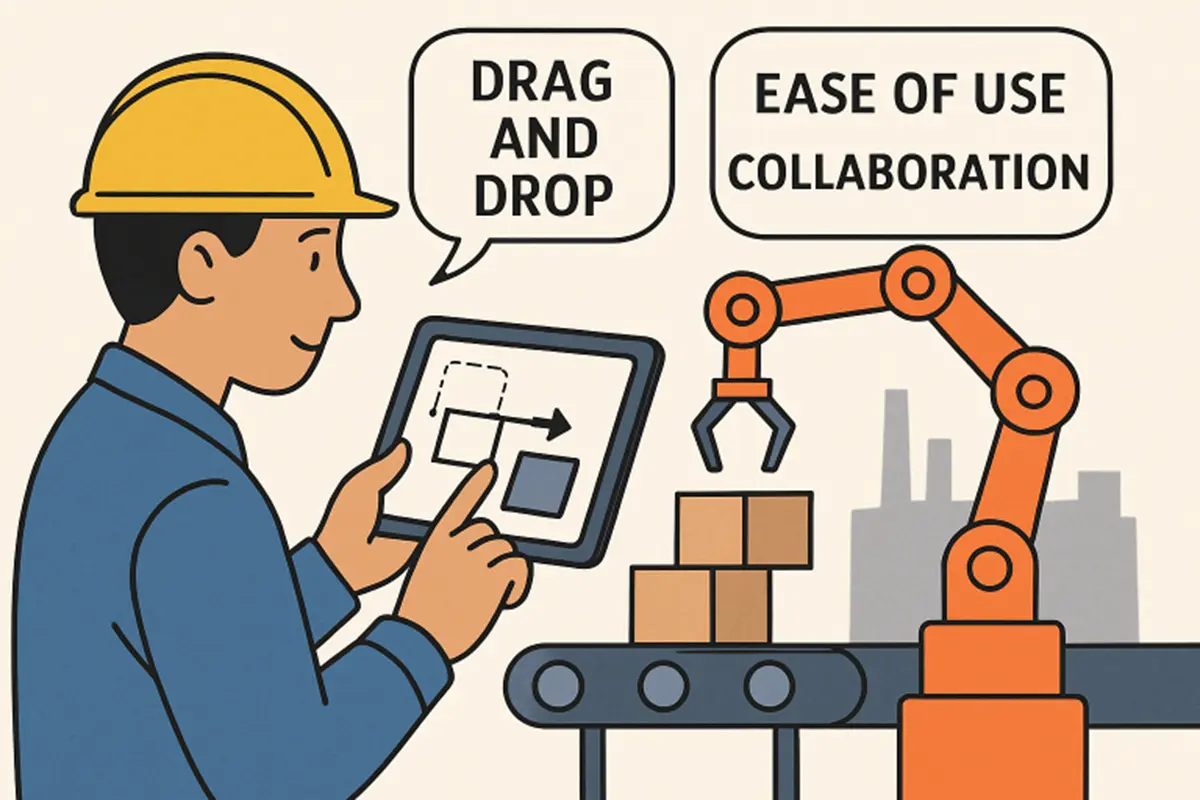
- Low-code and no-code platforms simplify robot training, opening up automation to a broader audience.
- Democratizing robotics reduces barriers to entry, speeding up innovation and adaptation in manufacturing.
- The future of assembly tasks will increasingly rely on human-robot collaboration facilitated by intuitive training tools.
Table of Contents
- Introduction
- The Rise of Low-Code and No-Code Platforms
- Benefits of Low-Code and No-Code Training
- Challenges and Considerations
- Future Outlook
- Final Thoughts
Introduction
Manufacturing is undergoing rapid transformation as robots assume increasingly complex tasks. Yet, the traditional approach to programming these robots is often slow, costly, and accessible only to those with advanced coding skills. This has created a disconnect between workforce abilities and the technology available—until now.
Low-code and no-code training platforms are bridging this gap, enabling a wider pool of employees to design, guide, and adapt robots for assembly processes. By leveraging these intuitive systems, companies can turn operators and engineers into automation specialists almost overnight. This shift is particularly relevant in AI-driven assembly line automation, where flexibility and speed are crucial for achieving a competitive advantage.
The accessibility of low-code and no-code solutions offers more than convenience; it is redefining what is possible for small and medium-sized enterprises, enabling large organizations to innovate at scale. Removing barriers to robot adoption fosters a new culture of experimentation and problem-solving directly on the factory floor.
Benefits of Low-Code and No-Code Training
Accessibility Across the Workforce
One of the most significant advantages is accessibility. Employees from different backgrounds can engage in programming robots for new assembly tasks, decreasing the need for specialized—or outside—programming consultants. This enhances self-sufficiency and unlocks creative problem-solving across all areas of the organization.
Increased Speed and Flexibility
Low-code and no-code platforms enable rapid development and task adjustments. Manufacturers facing sudden shifts in product demand or changes to assembly lines can program new routines promptly, minimizing downtime and maximizing responsiveness to market needs.
Cost Savings
Reducing dependence on external programming expertise brings down overall automation costs. This is especially vital for smaller manufacturers that may not have large-scale IT departments or robotics specialists.
Adaptation and Innovation
By empowering shop floor employees, manufacturers see more frequent and creative use of robotics. In turn, this keeps operations nimble, relevant, and prepared for unexpected changes.
Challenges and Considerations
Despite major advances, challenges persist. Adequate testing and validation are vital to ensure newly trained robots perform tasks correctly and safely. Organizations must establish rigorous processes to avoid errors that could lead to downtime or defects. Another concern is seamless integration with existing data and production management systems, which may require customized solutions during the rollout phase.
Workforce readiness and change management are equally critical. Even as barriers to programming drop, companies need to provide training that builds comfort and confidence with these new tools.
Future Outlook
As artificial intelligence, machine learning, and sensor technology draw closer, low-code and no-code systems will gain enhanced predictive and adaptive capabilities. We can expect these platforms to become even more user-friendly, enabling nearly anyone in a manufacturing environment to collaborate with advanced machines in real-time. The future of manufacturing belongs to organizations that are willing to upskill their workers and adopt a culture of flexible automation.
Final Thoughts
In a global market that rewards speed, customization, and efficiency, the rise of low-code and no-code platforms is a pivotal development for the industry. These tools are democratizing robot training, making innovation accessible and scalable. Companies that embrace this shift are building more resilient, responsive, and empowered teams—positioning themselves at the forefront of modern manufacturing.