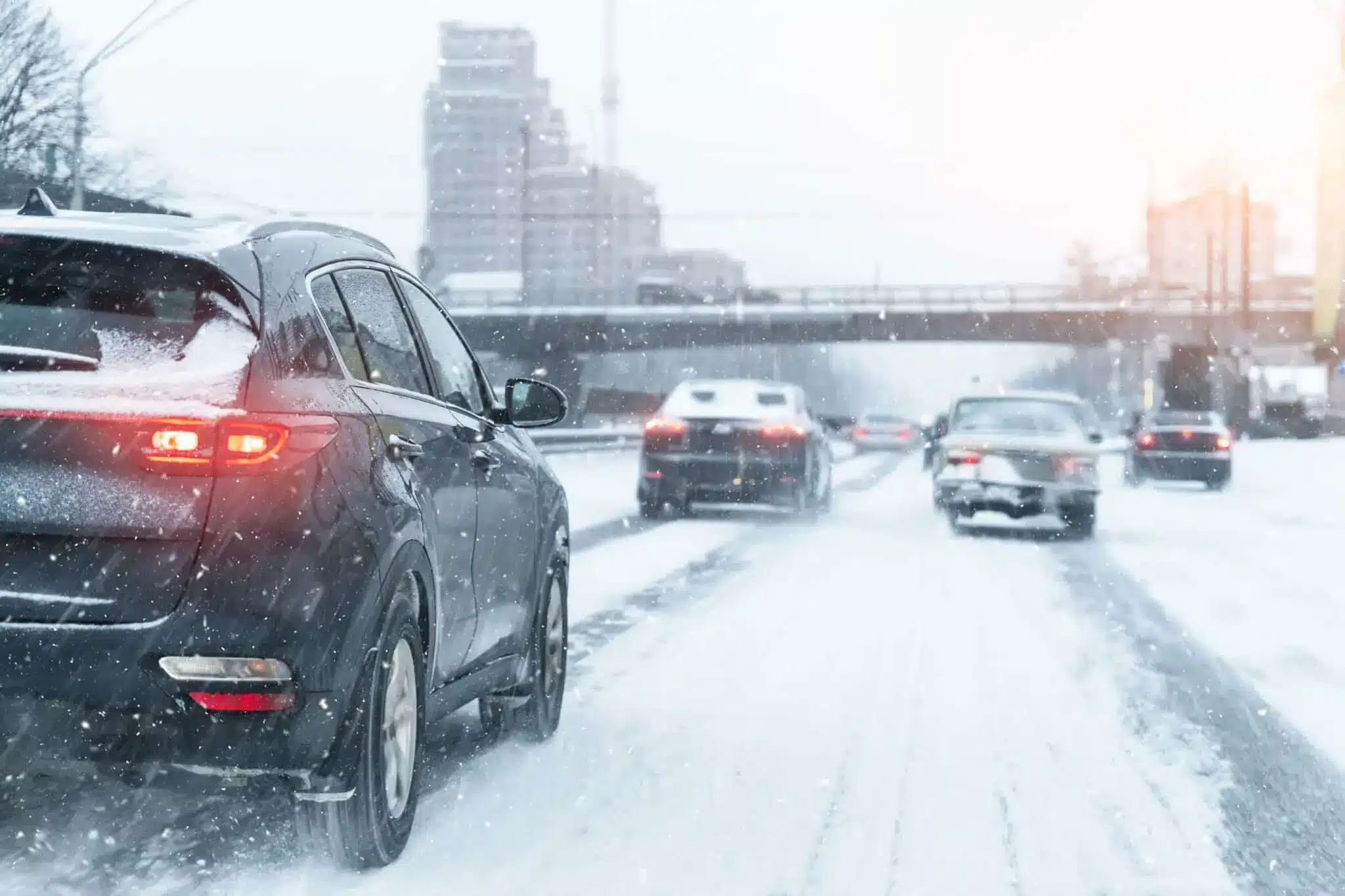
Winter driving hazards are often discussed as a nationwide seasonal problem, but a closer look at federal crash data suggests the danger is far more concentrated than many drivers realize. According to a recent analysis of national fatal crash records, a relatively small group of states account for a disproportionate share of winter driving risk—largely due to driver behavior rather than weather conditions alone.
The analysis, conducted by Suzuki Law Offices, examined four years of data from the National Highway Traffic Safety Administration’s Fatality Analysis Reporting System (FARS), focusing on crashes that occurred during the months most associated with winter driving: January, February, October, November, and December. By isolating fatalities involving speeding, alcohol impairment, distracted driving, and overall winter crash totals, the study aimed to identify where cold-weather driving is statistically most dangerous.
The findings place Wyoming at the top of the list. Despite its relatively small population, Wyoming recorded the highest per-capita winter fatality rate in the country. The data shows that severe winter storms, long stretches of rural highway, and high-speed travel combine to create a particularly deadly environment when drivers fail to adjust their behavior to road conditions.
Montana and Alaska follow closely behind. In Montana, alcohol involvement plays a significant role in winter fatalities, compounding the risks posed by rural roads and limited visibility. Alaska’s ranking reflects a high proportion of impaired-driving crashes and the challenges of remote road networks, where emergency response times can be extended during winter weather events.
Taken together, the top-ranked states share common characteristics: sparse populations, extensive rural highways, and higher exposure to high-speed travel in adverse conditions. These factors amplify the consequences of driver error, particularly speeding and impaired driving, which the study weighted most heavily in its winter danger index.
Nationally, weather-related crashes account for roughly 12% of all traffic collisions each year. However, the data complicates common assumptions about winter driving. While snow and ice are often blamed, federal records show that nearly three-quarters of weather-related crashes occur during rain or mist. Only about 18% involve snow, sleet, hail, or freezing rain. The severity of winter crashes, rather than their frequency, appears to be what drives fatality patterns in colder states.
Michigan provides a stark example of this dynamic. Among large states, Michigan recorded the highest number of winter driving fatalities between 2020 and 2023. During the 2022–2023 winter season alone, the state experienced more than 30,000 winter-weather crashes, including 59 fatal incidents. Speeding was the most frequently cited contributing factor. Over the four-year study period, winter crashes in Michigan increased by 27%, with fatalities rising at a similar rate.
By contrast, states with mild winter climates consistently recorded lower risk. Arizona ranked among the safest states for winter driving, with a winter fatality rate well below the national average. While parts of northern Arizona experience snow, most of the state’s population drives in dry winter conditions, limiting exposure to icy roads. The data also shows comparatively fewer winter crashes involving speeding or alcohol impairment, suggesting that both climate and driving behavior contribute to Arizona’s low-risk profile.
Southern states more broadly dominate the safest rankings. Florida, Alabama, Georgia, California, and Louisiana all reported minimal winter driving danger, reflecting limited cold-weather exposure and lower per-capita winter fatality rates. These states benefit not only from warmer temperatures, but also from reduced mechanical failure risks that rise sharply in colder climates.
Even so, winter driving remains a significant public safety concern nationwide. In 2023, more than 22,000 injuries were recorded in crashes that occurred on snow- or sleet-covered roads. Across the U.S., an estimated 1,300 people die each year in crashes involving snowy, icy, or slushy conditions. While overall traffic fatalities declined slightly between 2023 and 2024, winter months continue to pose elevated risks.
The data also highlights secondary hazards that can escalate winter driving incidents. Tire-related failures account for roughly one-third of winter breakdowns, while battery and electrical system failures increase sharply as temperatures drop. According to AAA, tows and battery issues made up nearly three-quarters of roadside service calls in 2024, leaving drivers stranded in dangerous conditions during winter storms.
The broader pattern that emerges from the analysis is clear: winter driving danger in the U.S. is not evenly distributed and is not driven by snowfall alone. States with high-speed rural road systems and elevated rates of risky driving behavior face the greatest winter fatality burden, while states with milder climates and fewer behavior-related crashes see substantially safer outcomes.
As the data shows, winter conditions expose existing vulnerabilities in road design and driver decision-making. Where drivers slow down, avoid impairment, and adapt to conditions, fatality rates remain low—even in cold months. Where those behaviors break down, winter roads become significantly more dangerous.
Also Read-How Small Businesses Benefit from Outsourced Accounting Services