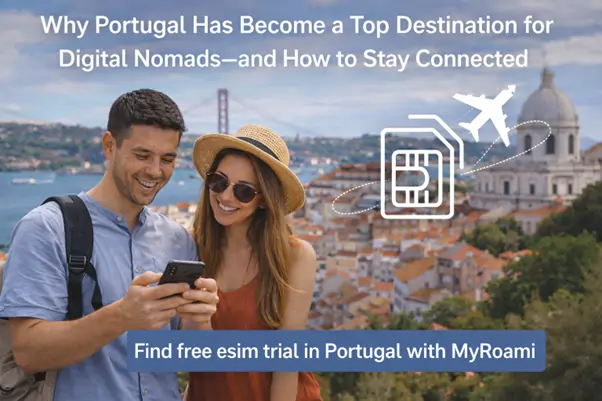
Over the past few years, Portugal has quietly transformed into one of the most desirable destinations for travelers, remote workers, and digital nomads—especially among Americans. From the historic streets of Lisbon to the beaches of the Algarve and the creative energy of Porto, the country blends old-world charm with modern infrastructure in a way few places can match.
But beyond the food, culture, and scenery, there’s another reason Portugal keeps showing up on travel and lifestyle radars: it’s exceptionally well suited for a connected, digital-first way of living.
Portugal’s Rise in Global Travel and Digital Culture
Portugal checks many of the boxes that modern travelers care about. It’s relatively affordable compared to other Western European countries, offers a high quality of life, and is known for its safety and welcoming atmosphere. English is widely spoken, and the pace of life supports both productivity and balance.
For digital nomads and long-stay travelers, Portugal has also positioned itself as a hub for remote work. Coworking spaces, startup communities, and flexible visa options have made it easier for professionals to base themselves there for weeks or even months. Cities like Lisbon and Porto regularly appear on lists of top destinations for remote workers, while smaller towns attract travelers looking for slower, more sustainable lifestyles.
In this context, reliable mobile connectivity isn’t optional—it’s essential.
Why Staying Connected Matters in Portugal
Whether someone is in Portugal for a short vacation or a longer stay, mobile data plays a central role in everyday life. Travelers rely on their phones for navigation, ride-hailing apps, restaurant bookings, digital payments, and social media. For remote workers, stable internet access is even more critical for video calls, cloud-based tools, and collaboration platforms.
While Portugal offers excellent WiFi in many cafés, hotels, and coworking spaces, travelers still need dependable mobile data when moving between cities, exploring coastal areas, or arriving at airports and train stations. Relying solely on public WiFi can be inconvenient—and sometimes risky—especially when handling work or personal information.
That’s where newer mobile technologies come into play.
What Is an eSIM and Why Travelers Prefer It
An eSIM (embedded SIM) is a digital alternative to the traditional physical SIM card. Instead of buying and inserting a plastic card, users download a mobile data profile directly onto their phone. Most modern smartphones sold in the U.S., including recent iPhone, Pixel, and Samsung models, already support eSIM technology.
For travelers, the appeal is clear. eSIMs can be activated in minutes, often before departure, and don’t require swapping out an existing SIM card. This means users can keep their U.S. number active while using local or regional data abroad.
Compared to roaming plans—which are often expensive and restrictive—eSIMs offer greater flexibility and cost control. Compared to buying a local SIM on arrival, they save time and remove language or setup barriers.
Testing Connectivity Before Committing
Even with all these advantages, travelers may hesitate to commit to a mobile data plan without knowing how well it will perform in practice. Coverage, speed, and reliability can vary depending on location and usage.
This is why free eSIM trials are becoming increasingly popular. They allow travelers to test mobile connectivity in real conditions before deciding on a full plan. For those preparing a trip to Portugal, platforms like MyRoami allows you to Find free esim trial in Portugalmake it possible to explore how eSIMs work and check coverage in advance.
This “try before you buy” approach fits perfectly with the mindset of modern travelers who value transparency and flexibility.
Who Benefits Most From eSIMs in Portugal?
While almost any traveler can benefit from an eSIM, certain groups find them especially useful in Portugal. Digital nomads and remote workers rely on consistent connectivity for daily work. Study-abroad students and long-term visitors need reliable access to communication tools and local services. Content creators and travelers documenting their experiences benefit from always-on data for uploads and social engagement.
Even short-term tourists appreciate the convenience of having mobile data immediately upon landing, without worrying about roaming charges or hunting for SIM card shops.
Portugal as a Model for Modern, Digital Travel
Portugal represents more than just a beautiful destination—it reflects a broader shift in how people travel and live. As work becomes more flexible and location-independent, destinations that support digital lifestyles naturally rise in popularity.
The country’s investment in infrastructure, combined with its cultural openness and quality of life, has made it a model for modern travel. Connectivity, once treated as a logistical detail, is now part of the overall experience—shaping how travelers move, work, and connect with the places they visit.
Conclusion
Portugal’s appeal goes far beyond its landscapes and cuisine. It has become a symbol of how travel, work, and lifestyle are merging in the digital age. For American travelers and remote professionals, staying connected is a core part of that experience.
With tools like eSIMs—and the ability to test them before committing—travelers can approach their trip with confidence, flexibility, and fewer surprises. In a world where mobility and connectivity are increasingly intertwined, Portugal stands out as a destination that truly understands modern travel.
Read more: 10 Common Causes of Car Accidents in Las Vegas
Exploring Alternatives to the Traditional Home-Selling Process