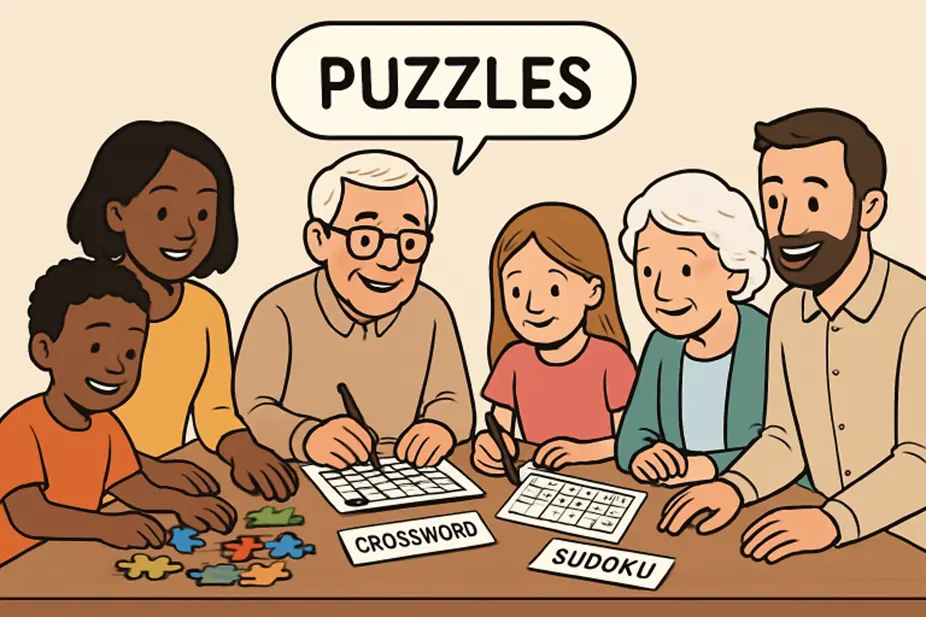
Puzzle solving is far more than a simple hobby—it’s a meaningful activity with tangible benefits for people at every stage of life. Whether enjoying a crossword in the morning or gathering with loved ones over a jigsaw puzzle, engaging with these challenges nourishes the mind and spirit. For those looking to start or expand their puzzle collection, click here to explore a variety of puzzle options for all ages and interests.
Solving puzzles can sharpen your intellect, aid in emotional regulation, cultivate patience, and build connections with others. The act of fitting pieces together, finding words, or solving riddles activates multiple areas of the brain, making these activities both beneficial and entertaining. Plus, with options ranging from logic problems to brain-teasing Sudoku, there’s something to suit every skill level and preference.
Beyond individual benefits, puzzles bring friends and families together, fostering moments of collaboration and joint accomplishment. They encourage group creativity as ideas are shared and strategies are developed, leading to a shared sense of satisfaction once a puzzle is completed. From childhood through older adulthood, puzzle solving can serve as a helpful exercise in mindfulness and lifelong learning.
Cognitive Benefits
Solving puzzles is a robust mental exercise that activates key cognitive skills. Activities like crosswords, Sudoku, and logic games promote sharper memory retention, improved concentration, and more agile problem-solving abilities. According to experts at U.S. News Health, regularly challenging your mind with such activities is one of the most effective ways to keep your mind sharp throughout life. These enhancements span spatial reasoning, logic, and the ability to process complex information, a testament to puzzle-solving’s far-reaching impact on the brain.
Emotional and Psychological Benefits
Puzzle-solving can also be a powerful tool for emotional self-care. As players focus intently on fitting a piece or working out a tricky clue, stress and anxiety tend to melt away. This focused immersion supports mindfulness by grounding attention in the present moment. Additionally, solving a problem releases dopamine, the “reward” neurotransmitter, which boosts mood and motivation and drives further engagement. Completing a challenging puzzle imparts a sense of achievement and builds resilience: a reminder that complex problems, approached with patience, can be solved. For more, The New York Times explores how puzzles promote mindful relaxation and emotional clarity.
Physical and Developmental Advantages for Children
Children, in particular, benefit tremendously from puzzles. Grasping pieces or arranging number tiles supports fine motor development and hand-eye coordination, enhancing skills necessary for academic tasks such as writing or drawing. Moreover, children learn essential life skills such as patience, persistence, and goal-setting as they work toward completing a puzzle. Overcoming obstacles and trying new strategies helps to build confidence and a growth mindset—traits invaluable both in and out of the classroom. According to research cited by the American Academy of Pediatrics, play-based activities such as puzzle play a crucial role in early learning and cognitive development.
Social and Family Bonding
While puzzle solving can be a solitary pleasure, it often blossoms into a social activity that brings people together. Families and friends collaborating on a puzzle must communicate clearly, share ideas, and work as a team. This group effort nurtures deeper relationships and teaches essential interpersonal skills, like compromise and empathy. Whether it’s around a board game or a jigsaw puzzle on the dining room table, the shared commitment to solve and celebrate success strengthens emotional connections and creates enduring fond memories.
Puzzles as a Tool for Lifelong Learning
One of the most exciting aspects of puzzle solving is how it supports a lifelong journey of learning. Each new puzzle presents solvers with unique challenges that require adapting strategies, learning new concepts, and building on existing knowledge. This process trains the brain to approach unfamiliar problems with curiosity and creativity—skills that carry over to every aspect of life. From students to retirees, puzzles can serve as a bridge to continuous self-improvement and intellectual growth, sparking curiosity and adaptability that last a lifetime.
Conclusion
Puzzle solving is a holistic activity that pays dividends across the lifespan. From the youngest learners to mature adults, puzzles foster cognitive development, emotional wellness, dexterity, teamwork, and a zest for learning. Whether enjoyed solo or in a group, puzzle-solving is a simple, accessible, and enjoyable way to support mental health and personal growth. Start incorporating more puzzles into your life today and experience these lasting benefits for yourself.