Understanding the Impact of Weather on Road Safety
Every year, weather conditions account for a significant share of road accidents across the United States. Rain, snow, ice, fog, and wind each create unique challenges for drivers, often resulting in collisions, injuries, and fatalities. According to the Federal Highway Administration, around 21 percent of all vehicle crashes nationwide involve hazardous weather. Being prepared for these risks and knowing how to respond safely is crucial for every motorist. Insights shared by attorneys and safety advocates, such as those found on quinnlawyers.com, emphasize the importance of taking precautions and staying alert during changing weather.
Weather not only affects drivers’ visibility and control but also alters the physical state of the roads, making it harder for vehicles to stop or maneuver safely. Even experienced drivers can lose control in a sudden downpour or an unexpected icy patch. The risks are magnified during commutes or long-distance travel, where conditions can change rapidly along the route. By integrating good driving habits and checking conditions before heading out, much of the danger posed by the elements can be reduced.
When drivers stay informed and drive defensively, they not only protect themselves but also contribute to safer roads for everyone. Automakers and technology companies have responded to these hazards by introducing advanced driver assistance systems, but even the latest features cannot replace the impact of driver awareness and caution. Learning how to adapt to inclement weather is as important as any modern safety device.
For those seeking even deeper insight into national statistics and patterns, the National Highway Traffic Safety Administration’s resources are invaluable.
Common Weather Conditions Leading to Accidents
Rain and Wet Roads
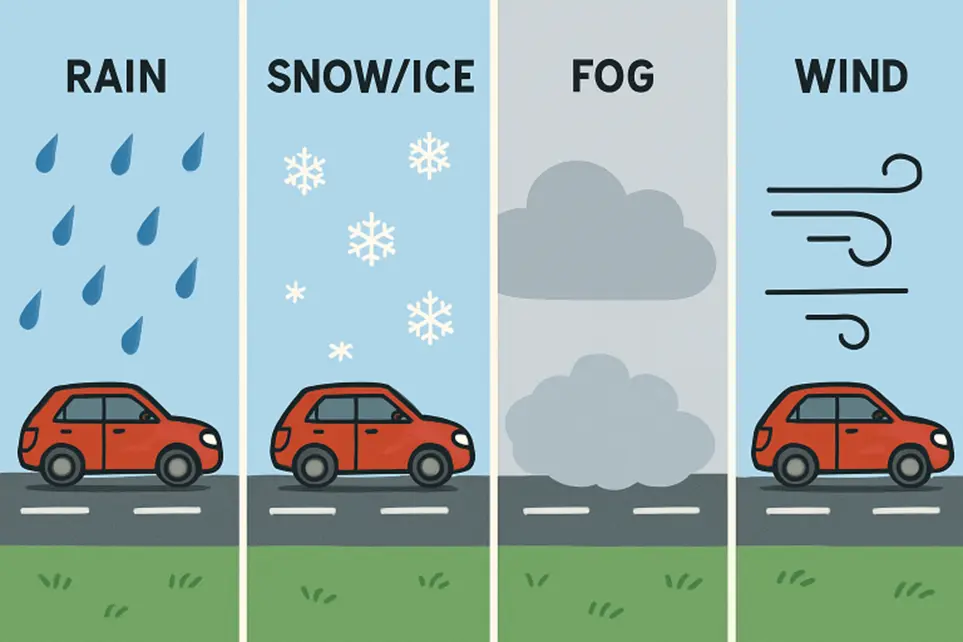
Rain presents multiple hazards for motorists. It reduces the grip your tires have on the road and increases the risk of hydroplaning, where the vehicle rides on a layer of water and momentarily loses contact with the pavement. Even moderate rainfall can blur vision and obscure details such as road markings and brake lights. These factors heighten the likelihood of rear-end collisions and run-off-road crashes, particularly during the first few minutes of rainfall when oil and debris rise to the surface.
Snow and Ice
Snow and ice are among the most treacherous weather-related dangers drivers encounter. When snow piles up on roadways or refreezes overnight, the road can become as slick as polished glass. Black ice, a thin and almost invisible sheet of ice, contributes to countless accidents every winter because it is difficult to spot. Losing traction on ice makes it difficult to brake or steer, increasing the risk of skidding out of control.
Fog
Fog can dramatically reduce visibility, sometimes making it hard to see vehicles just a few feet ahead. The effect can be hazardous on highways, where speeds are higher and reaction times shorter. Multi-car pileups are tragically more frequent in dense fog because drivers are unable to react in time to slowing or stopped vehicles. Areas near bodies of water, valleys, or marshlands can be particularly prone to sudden fog formation.
High Winds
Strong winds are often overlooked as a driving hazard, but they pose real threats, particularly for high-profile vehicles like trucks and vans. Winds can push cars out of their lanes, topple trailers, or hurl debris onto the road. Even passenger vehicles may struggle to remain in their lanes or avoid obstacles during wind gusts.
Real-Life Examples of Weather-Related Crashes
The dramatic effects of weather on road safety are evident in several recent multi-vehicle incidents. In October 2023, a severe event unfolded on Interstate 55 in Louisiana when “super fog,” a dense blend of fog and marsh fire smoke, enveloped the stretch of highway. The resulting crash involved approximately 160 vehicles and led to several deaths. The unpredictable blend of natural and human causes behind this phenomenon demonstrates how layered and unexpected road risks can become.
Preventive Measures for Drivers
- Slow Down: Reducing your speed increases your control and allows for longer stopping distances in adverse weather.
- Increase Following Distance: Leaving more space between your car and the car in front gives you a better chance of avoiding a collision if you or others must brake suddenly.
- Use Appropriate Lighting: Activating your headlights in conditions like rain, snow, or fog makes your vehicle more visible to others and helps illuminate the road ahead.
- Avoid Sudden Movements: Gentle steering and gradual braking help minimize your risk of skidding, especially on slick roads.
- Stay Informed: Check forecasts and up-to-date road conditions before you leave, and consider postponing trips in the worst weather.
Technological Advances in Weather-Related Safety
The ongoing integration of technology in automobiles and transportation networks is making a difference. Advanced weather forecasting tools, improved radar technology, and in-car systems like traction control, anti-lock brakes, and automated hazard alerts are becoming standard features. The Federal Aviation Administration’s NextGen Weather program is aiding the aviation sector by providing accurate, real-time weather data to minimize delays and accidents caused by bad weather. Similarly, the National Weather Service delivers timely alerts and forecasts, helping drivers plan smarter and stay safer.
Conclusion
Understanding how the weather affects driving enables motorists to make safer choices and respond appropriately to rapidly changing conditions. By keeping a close eye on forecasts, adjusting driving habits, and using modern safety features, drivers can significantly reduce their exposure to weather-related accidents. A proactive approach not only safeguards individual drivers and their passengers but also contributes to the shared goal of safer roads for all.