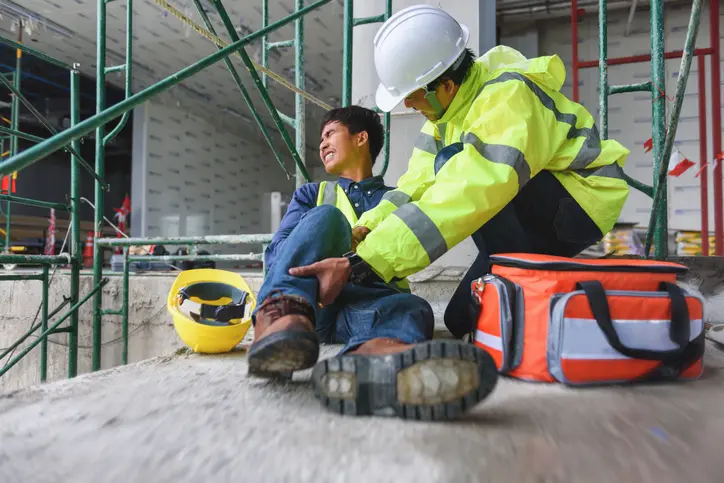
As of August 2025, more than 170.7 million Americans were either working or actively seeking employment, representing over 65% of the U.S. population. Yet behind this massive workforce lies a sobering reality: millions of Americans are being injured on the job each year, often in ways that permanently affect their livelihoods, health, and financial stability.
In 2023 alone, U.S. employers reported 2.6 million nonfatal workplace injuries and illnesses, with 946,500 cases resulting in time away from work. That equates to a worker being injured approximately every 11 seconds, a frequency that underscores how deeply embedded occupational risk remains in modern labor. This study from The Schiller Kessler Group will explore these industries a bit more in-depth.
The Industries Bearing the Greatest Burden
While construction and manufacturing are often seen as the most dangerous professions, the data reveals a more nuanced and troubling picture.
The health care and social assistance sector recorded the highest number of workplace injuries nationwide, with 562,500 cases in 2023. These injuries are largely driven by repetitive strain, overexertion, patient handling, and chronic fatigue — risks that have intensified amid staffing shortages and rising patient loads.
Manufacturing followed closely behind with 355,800 injuries, while retail trade reported 353,900 cases, highlighting the risks associated with long shifts, constant movement, and frequent lifting. Transportation and warehousing accounted for 279,800 injuries, reflecting the hazards of vehicle operation, cargo handling, and tight delivery timelines.
Even sectors traditionally viewed as lower-risk were far from immune. Professional and business services and ambulatory health care services both reported over 130,000 injuries, proving that workplace injury is not confined to heavy industry alone.
Where Injuries Strike the Body
Data from the National Safety Council shows that workplace injuries do not affect the body evenly.
- Upper extremities — hands, wrists, arms, and shoulders — accounted for 36% of all nonfatal injuries, often caused by repetitive motion, lifting, or machinery contact.
- Back and trunk injuries made up 24%, reflecting persistent ergonomic failures and overexertion.
- Lower extremities, including knees and feet, represented 21%, commonly due to slips, trips, and falls.
These injuries frequently require extended recovery times, restrict mobility, and prevent workers from returning to their roles — especially in physically demanding jobs.
Blue-Collar Workers Remain the Most Vulnerable
The divide between job types remains stark. Blue-collar workers account for 70–75% of workplace injuries requiring time off, particularly in transportation, construction, manufacturing, and warehousing. These roles expose workers to higher risks through repetitive physical labor, heavy equipment, and environmental hazards.
White-collar workers experience fewer acute injuries, but still face long-term harm from ergonomic strain, poor posture, and repetitive tasks. While these injuries may not always result in extended absences, they degrade quality of life and productivity over time.
The Economic Toll
Workplace injuries are not just a safety issue; they are an economic crisis. The National Safety Council estimates that work-related injuries cost the U.S. economy more than $167 billion annually, or roughly $1.2 million every hour.
Employers lose over 70 million workdays each year due to injuries, while another 55 million days are spent on restricted duty or job transfers. Each disabling injury costs an average of $44,000, with severe cases exceeding $100,000 once productivity losses are factored in.
A Systemic Problem Demanding Action
This data makes one reality clear: workplace injuries remain a defining risk of American labor. Preventing them will require targeted safety strategies, better ergonomics, increased automation where possible, and policies that prioritize worker well-being — especially in industries that keep the country running.
Also Read-From Concept to Reality: How Technology Shapes Design